

 By Nathan Hawes
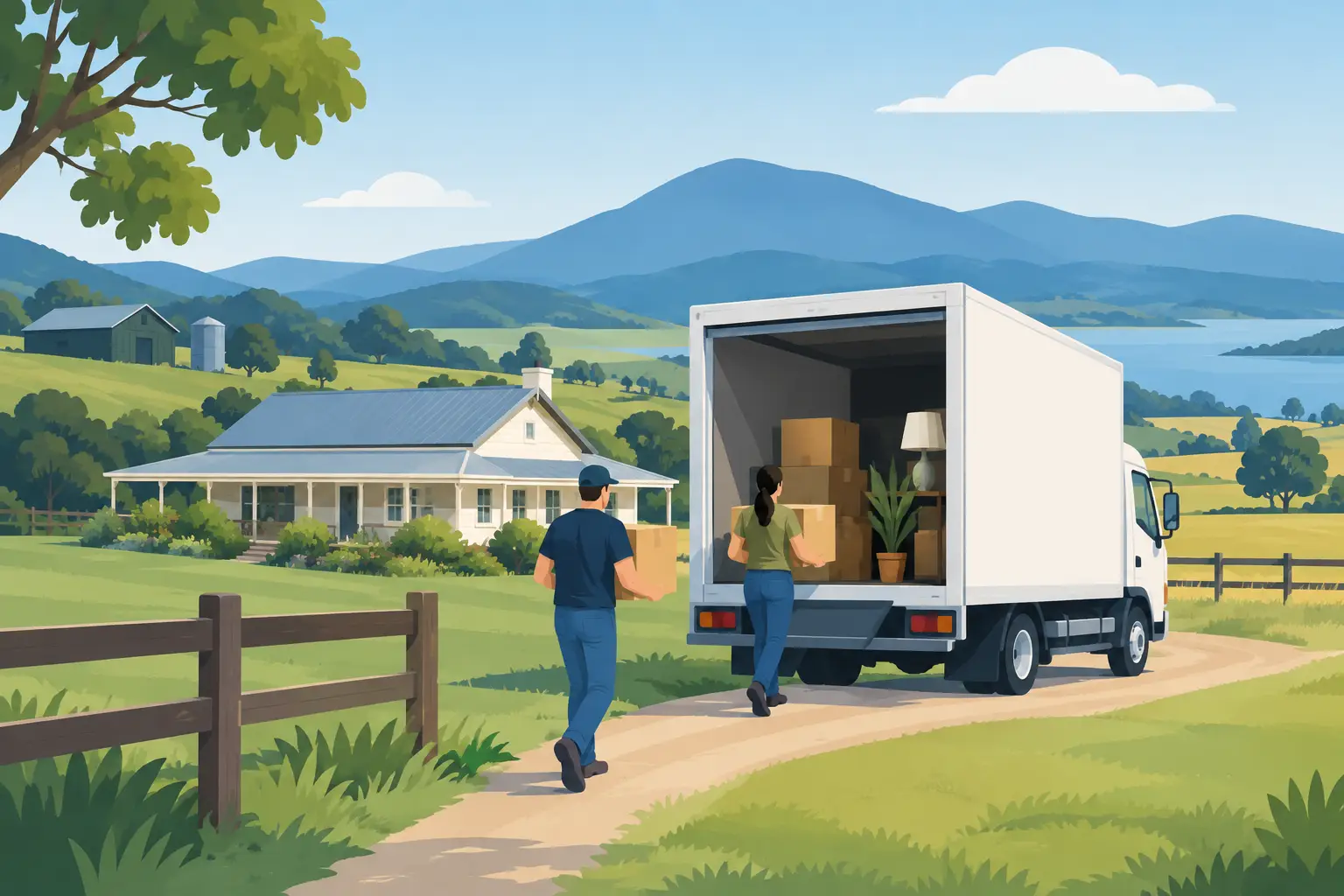
A rural move can look straightforward on a map and still take far more planning than a town move. This rural property moving example follows a typical Gippsland household relocation: a family moving from a five-acre property outside Traralgon to another home near Sale. The distance is manageable, but the job involves a long gravel driveway, a shed full of heavy gear, a steep verandah, changing weather and furniture that has not moved for years.
The lesson is simple: country moves run best when the removalist knows the access, the load and the order of work before the truck arrives.
The rural property moving example: what was being moved
The property had a three-bedroom house, a separate bungalow, a machinery shed and a double garage. The household contents included standard furniture, whitegoods, boxes, outdoor settings and garden tools. There were also several items needing extra care: a solid timber dining table, a large fridge, an upright piano, a ride-on mower and shelving from the shed.
This is where a rural job differs from a standard unit or suburban house move. The overall volume may not be huge, but items are spread across several buildings. A family may also have accumulated heavier equipment, spare materials, tools and outdoor furniture that would not be part of a smaller town move.
Before quoting, it makes sense to establish what is actually going. Old paint, fuel, gas bottles, chemicals, loose soil and some machinery may need separate arrangements. A removal truck is not the place for hazardous goods, and loading them without checking can create a safety issue for everyone.
Access was the first job to solve
The driveway on this example property was roughly 250 metres long, gravelled and narrow at the gate. There were low tree branches near the house and a turning area that was firm in dry weather but soft after rain. The family had also placed a skip bin near the front, reducing the available space.
A site check or a detailed phone discussion should cover these points early. The removalist needs to know whether a larger truck can enter safely, turn around and get close enough to load without excessive carrying. If access is tight, a smaller truck, a shuttle load or a different parking position may be the safer choice.
Customers can help by trimming low branches where practical, moving vehicles and trailers, clearing gates, and keeping pets indoors on moving day. It is also worth checking the driveway after rain. A bogged truck is an expensive way to start a move, and no one wants heavy furniture carried an extra hundred metres through mud.
Planning the load room by room
For this move, the house contents were loaded first, followed by the bungalow, garage and shed. That order was not accidental. The family needed beds, the fridge, kitchen basics and everyday furniture delivered first at the new home. Shed items and non-essential outdoor gear could follow later in the day.
Packing was organised around what would be needed immediately. Clearly marked boxes for the first night contained bedding, towels, chargers, medications, kettle supplies, basic tools and paperwork. Those boxes were kept together so they could be unloaded into one easy-to-find spot rather than disappearing among dozens of cartons.
The kitchen required proper packing rather than filling boxes until they were too heavy to lift. Plates and glassware were wrapped, with heavier items kept low in smaller boxes. Large boxes suit lighter things such as doonas, linen and cushions. This reduces the chance of cartons splitting or someone straining their back while unloading.
Furniture protection matters even more on country moves because there can be more travel time, rougher driveway surfaces and more handling between buildings. Blankets, shrink wrap, mattress covers and tie-downs help prevent rubbing, dust and movement in transit. Timber furniture, mirrors and televisions should be protected and secured separately, not wedged in wherever there happens to be room.
The shed needed its own plan
The shed was the part of the move most likely to cause delays. It contained hand tools, boxed parts, long-handled garden equipment, shelving and the ride-on mower. The family had done some sorting beforehand, which saved time, but the mower and shelving still needed special attention.
A ride-on mower should be assessed for safe loading, weight and transport position. Fuel levels may need to be reduced, and loose attachments should be removed or secured. Shelving is generally quicker and safer to transport once dismantled, with bolts taped to a labelled component or placed in a marked bag.
Long items such as rakes, shovels and timber offcuts should be bundled where possible. Random loose gear slows down loading and makes it harder to protect household furniture. If a shed includes expensive tools or sentimental items, set them aside and tell the team what needs particular care.
Timing around weather and regional travel
A regional move is not only about the kilometres between properties. It includes the time spent loading, travelling, unloading and dealing with access at both ends. In Gippsland, rain, wind and heat can all change the pace of the job.
For this example, the move was booked for an early start in autumn. The forecast was dry, the driveway had time to firm up, and the team had daylight for the full unload. That is often a sensible approach for rural properties, especially where there are gates, uneven ground or a shed to work through.
The receiving property near Sale had a wide driveway but a tighter entry into the living area. The piano could not go through the front door without removing a door panel and carefully measuring the path. This was raised before moving day, allowing the job to be planned properly rather than forcing an awkward decision on the spot.
Pianos, pool tables, large fridges, safes and bulky timber pieces deserve clear discussion during booking. They may need extra equipment, more hands or a specific loading method. Honest details early on lead to a more accurate quote and a safer move.
Why the cheapest-looking option can cost more
It is understandable to compare removal quotes, particularly when moving a whole household. But a rural move should be compared on more than the hourly figure. Ask what truck size is proposed, whether furniture protection is included, how access concerns are handled, and whether the team is insured for the work they are doing.
A very small truck may appear cheaper but create more trips. A crew that has not allowed for a long driveway, a piano or a packed shed can run late. On the other hand, a bigger truck is not automatically the answer if the driveway cannot take it. The right setup depends on the property, the volume and the access at both addresses.
Clear, honest pricing works best when the information supplied is clear too. Photos of driveways, gates, stairs, sheds and oversized items can be useful when requesting a quote. Mention if settlement times are tight, if keys will not be available until the afternoon, or if there is a second pickup location. These details affect scheduling and help avoid surprises.
Moving day: keeping the job under control
On the day, the family kept one person available to answer questions and direct the crew. They also kept children and dogs away from loading areas, which made the work safer and less stressful. Valuables, documents and small sentimental items travelled with the family rather than in the truck.
At the new property, rooms were labelled and the removal team was told where major pieces belonged before unloading began. Beds and essential furniture went in first, followed by boxes for each room. The shed equipment was placed together but left unpacked until the household was settled.
That approach is practical, not fancy. You do not need every box unpacked on day one. You need a safe home, working appliances, somewhere to sleep and the confidence that your belongings arrived in good order.
For rural and regional moves across Gippsland, Hawes’s Removals focuses on that kind of preparation: careful handling, sensible planning and a team ready to work with the property in front of them. A few good details before booking can turn a complicated country move into a manageable day.