

 By Nathan Hawes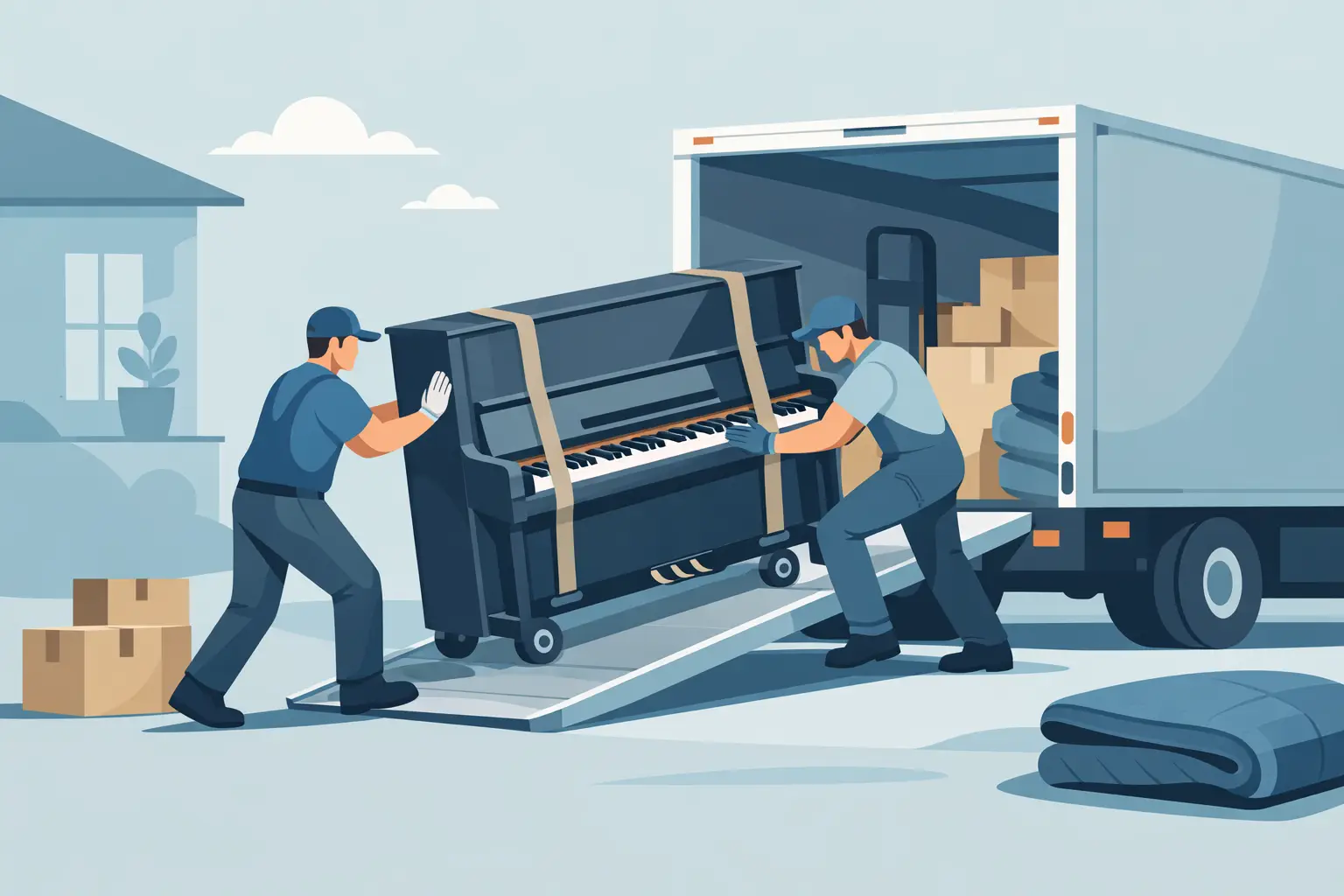
A piano can look like one solid piece of furniture, but it is a heavy, awkward instrument with a delicate working mechanism inside. An upright piano commonly weighs 180 to 300 kg, while a grand can weigh far more. Knowing how to move a piano safely means planning the whole route before anyone puts their hands on it, not simply finding a few strong people on moving day.
One wrong lift can injure someone, chip a wall, damage flooring or put the piano out of regulation. For most home moves in Gippsland and across Victoria, professional piano transport is the sensible option. If you are organising the move yourself, the steps below will help you understand the risks, prepare properly and know when to stop.
Start by assessing the piano and the access
The type of piano changes the job. Upright pianos are generally moved standing upright, supported by a piano trolley or skid. They are still top-heavy, with much of the weight sitting high and towards the back. Baby grands and grand pianos need a more specialised approach: the lid is secured, the legs and pedal lyre are removed, and the body is carefully placed on its side in a padded piano board or skid.
Before arranging labour or equipment, measure the piano at its widest, tallest and deepest points. Then measure every doorway, hallway, gate, stair landing, lift, driveway turn and vehicle access point. Do not rely on a quick look. A narrow turn at the end of a hallway can cause more trouble than the front door.
Also check the conditions around the property. Wet paths, loose gravel, uneven paving, steep driveways and tight unit access all increase the risk. In regional Victoria, it is also worth considering the distance from the house to where the truck can park. A longer carry means more handling, more fatigue and more chances for something to go wrong.
Equipment needed to move a piano safely
A standard furniture dolly and a couple of blankets are not enough for a piano. The right gear keeps the load stable and protects both the instrument and the property. At a minimum, a properly planned upright piano move should involve:
- heavy-duty moving blankets or piano pads
- strong moving straps rated for the load
- a purpose-built piano trolley, skid or four-wheel dolly
- a ramp or liftgate suitable for the vehicle and weight
- non-slip gloves and enclosed work boots
- corner protection and floor coverings where needed.
Ratchet straps are useful for securing the wrapped piano in the truck, but they should not be tightened directly over timber edges, keys or delicate moulding. Use padded protection underneath and secure the load to approved anchor points. The aim is to prevent movement in transit without putting pressure on the piano case.
Never attempt to move a piano in a ute tray or loosely in the boot of a trailer. It needs to be upright, supported and restrained inside a suitable vehicle. Sudden braking, roundabouts and rough roads can shift an unsecured piano quickly.
Prepare the piano before lifting
Remove any loose items from the top of the piano and take down nearby pictures, mirrors or furniture that may be in the carrying path. Close and lock the keyboard lid if it has a lock. If it does not, secure it gently with a padded strap or suitable tape that will not mark the finish. Do not tape directly onto polished timber.
Wrap the piano fully in padded blankets, paying close attention to corners, pedals, the keyboard area and the back. The wrap should stay in place as the piano is tilted and rolled. Secure the blankets with straps around the body, but keep straps clear of the keys and avoid crushing any decorative timberwork.
For an upright piano, do not remove the legs unless a qualified technician or removalist has advised it. The legs are not carrying handles, and lifting from them can cause serious damage. With a grand piano, dismantling is part of the correct process, but each leg must be removed while the weight is fully supported. This is not a job for an improvised setup in the lounge room.
Take photos before the move, particularly if the piano is valuable or has existing marks. This gives you a clear record of its condition and helps ensure all removable parts are accounted for.
Use a trained team and a clear lifting plan
Piano moving is not a one-person job and it is rarely a two-person job. The exact number of people depends on the piano weight, route and equipment, but there should always be enough trained handlers to control the load without rushing. Nobody should be trying to catch, hold or stop a falling piano.
Before lifting, agree on who is leading the move and what commands will be used. Simple calls such as “stop”, “lift”, “lower” and “clear” prevent mixed messages. The lead person should be able to see the route and have the authority to pause the move if the path is blocked or the piano becomes unstable.
Lift with legs, keep hands clear of pinch points and keep the piano close to the body where possible. Avoid twisting while carrying. If the piano needs to change direction, set it down safely, reposition and continue. Trying to pivot a heavy piano mid-lift is how fingers, backs and walls get damaged.
When using a trolley, the piano must be balanced and secured before it moves. Travel slowly over thresholds and joins in the floor. One person should guide the front of the trolley while others control the sides and rear. Children, pets and bystanders need to stay well clear until the piano is safely loaded.
Stairs, tight corners and sloping ground
Stairs are the point where a simple piano move can become unsafe. A heavy upright on stairs needs specialist equipment, experienced handlers and a route that has been properly assessed. Stair treads, handrails and landings may not be suitable for the weight, especially in older homes or apartments.
Do not use a makeshift plank as a ramp. Do not try to slide the piano down steps on cardboard, blankets or furniture. These methods remove control when you need it most. If there are stairs, a steep slope, a balcony lift or a tight turn that requires the piano to be tipped significantly, book a professional removalist with piano-moving experience.
The same applies to narrow doorways. Removing a door from its hinges can create useful clearance, but it does not solve a difficult angle or a top-heavy load. Measure first and choose a safer route if one is available.
Load and transport the piano correctly
Once at the truck, use a rated ramp or hydraulic liftgate. The piano should be moved into the vehicle under control, with handlers positioned safely to guide it rather than standing directly below the load. Keep the vehicle floor dry and clear of loose items.
An upright piano is normally transported upright. Position it against a stable part of the truck body, pad it from other furniture and restrain it firmly so it cannot roll or slide. Do not stack cartons, chairs or other heavy items against it. A piano needs its own protected space.
Drive smoothly. Allow more room for braking, take corners steadily and avoid sudden lane changes where possible. On a longer run, such as Traralgon to Melbourne, properly checking the restraints during a stop can be worthwhile, especially if the truck has travelled over uneven roads.
At the destination, the unloading process deserves the same care as loading. Check the new route again, particularly if weather has changed or access is different from what was expected. Place the piano in its final position before removing blankets, rather than dragging it around the room afterwards.
Let the piano settle after the move
Once the piano is inside, give it time to adjust to the new temperature and humidity before booking tuning. Moving it from a cool garage, warm house or air-conditioned room can affect the strings and soundboard. A wait of one to two weeks is often sensible, although the best timing can depend on the instrument and its new environment.
Keep it away from direct sun, heaters, fireplaces, exterior doors and damp walls. A level internal wall is usually a better home than a spot beside a window or heating vent. If the piano was tipped, bumped or exposed to rain during the move, ask a piano technician to inspect it before regular use.
When to call professional piano movers
There is no prize for taking an unnecessary risk with a piano. Professional help is particularly worthwhile for grand pianos, stairs, apartment buildings, difficult access, long-distance moves, antique instruments and any piano that has sentimental or significant financial value. Insured handling, proper equipment and a crew that moves heavy furniture every day can cost less than repairing a damaged piano, floor or body.
At Hawes’s Removals, careful planning starts with the access, the piano type and the travel route, so the move is carried out with the right people and equipment from the outset. A safe piano move should feel controlled from the first measurement to the final placement – and if the route does not feel controlled, it is time to bring in experienced hands.