

 By Nathan Hawes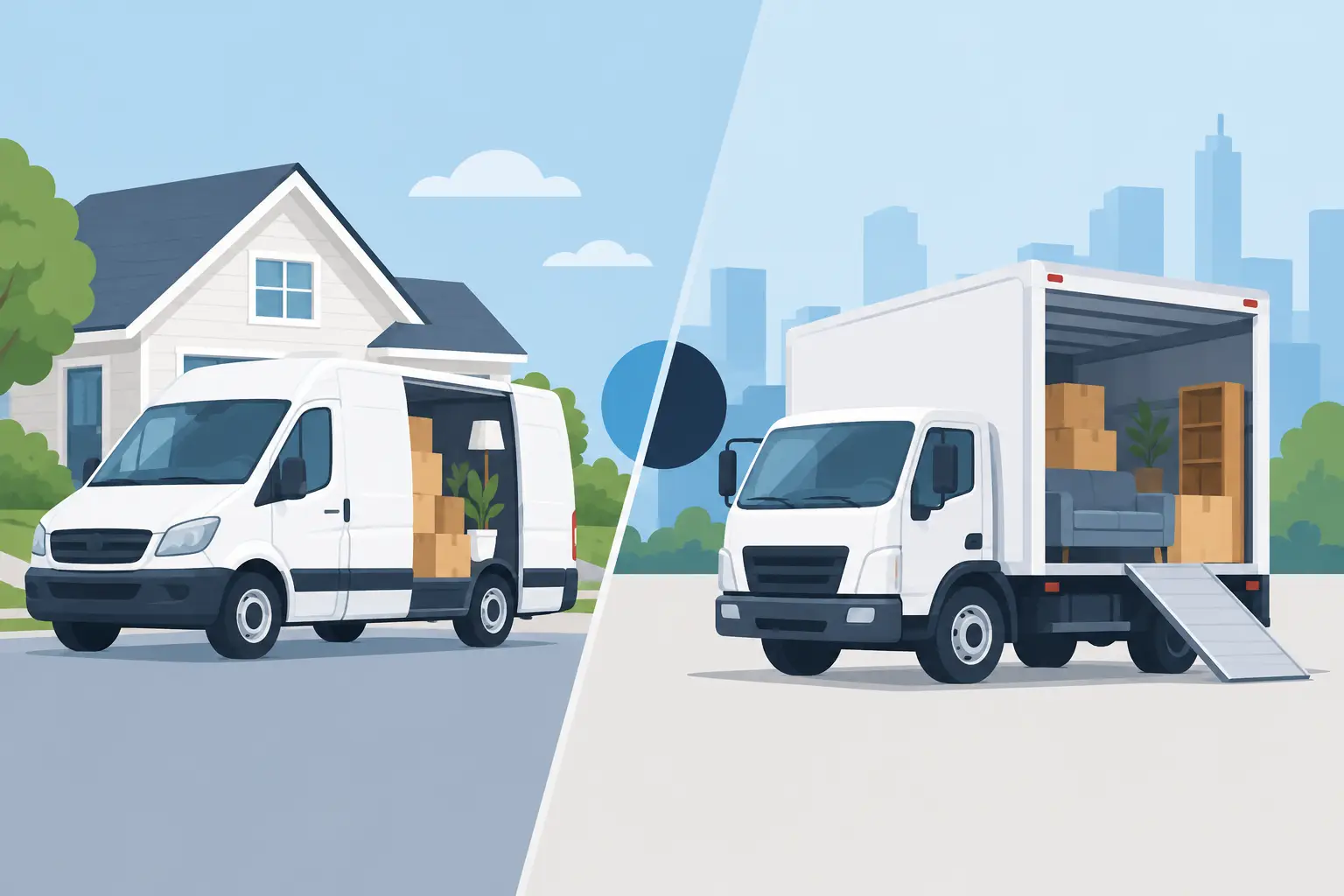
A moving van versus removal truck decision can affect far more than the number of trips you make. It changes who does the lifting, how safely your furniture travels, what the day costs and whether moving day feels manageable or turns into a long, tiring job.
For a few boxes and a small unit, a van can make good sense. For a family home, an office, or anything involving heavy and fragile furniture, a proper removal truck and experienced crew are often the safer call. The right choice comes down to the size of the job, access at both properties, your available time and how much hands-on work you want to take on.
Moving van versus removal truck: the main difference
A moving van is usually a smaller hire vehicle that you drive and load yourself. It suits compact moves where access is tight and the load is light enough to handle without specialised gear. You might use one for a student move, a one-bedroom unit, a few items going into storage or a short local shift.
A removal truck is built for larger furniture loads and is generally operated as part of a removals service. It may have a larger enclosed body, tie rails, moving blankets, ramps or a tail lift, trolleys and other equipment designed to protect household or business items in transit. Just as importantly, it comes with people who know how to load a truck properly.
The vehicle is only part of the difference. With a van, you are organising the loading plan, carrying furniture, securing the load and driving an unfamiliar vehicle. With a removal truck, the crew handles the practical work from lifting and wrapping through to positioning items at the new place.
When a moving van makes sense
A van is a sensible option when the move is genuinely small and simple. If you are moving a mattress, boxes, a desk, a small fridge and a few personal items from a unit in Traralgon to nearby storage, hiring a van can be a budget-friendly way to get it done.
It can also work well where narrow driveways, low carports or limited parking make a larger truck difficult. Some inner-suburb streets and compact unit complexes have access restrictions that need careful planning, regardless of the vehicle used.
The catch is that a van is not automatically the cheapest option. Hire fees, fuel, excess kilometres, insurance upgrades, moving blankets, trolleys and extra days can add up. If you need several trips or recruit friends to help, the saving can disappear quickly.
A van is best when you have enough capable help, the furniture is straightforward, and you can give the move a full day without rushing. Heavy whitegoods, large timber pieces and awkward stairs can change that equation fast.
When a removal truck is the better choice
A removal truck is usually the practical choice for a two-bedroom home and above, or any move with a proper household load. It gives you more carrying capacity, but the real benefit is efficient loading. Experienced removalists stack and secure furniture so it is less likely to shift, rub or tip during travel.
This matters on longer Victorian runs too. A move from Gippsland to Melbourne is not just about getting items into a vehicle. Furniture needs to be protected for the road, particularly when the load includes glass cabinets, artwork, timber furniture, televisions, washing machines or boxed household goods.
A truck and crew are also worth considering if you have difficult items. Pianos, pool tables, large fridges, solid timber wardrobes and bulky lounges need more than muscle. They need the right equipment, a clear lifting plan and enough people to move them without damaging the item, the walls or someone’s back.
For office moves, a removal truck helps keep downtime under control. Desks, filing cabinets, monitors, stock and equipment can be packed in a logical order, delivered to the right area and reassembled where agreed. That is a much better outcome than having staff spend days making ute or van runs.
Space is not the same as usable capacity
It is easy to look at a van’s advertised cubic metres and assume everything will fit. In practice, bulky furniture creates gaps, and poor stacking wastes a surprising amount of room. A lounge, bed base and fridge can take up far more usable space than their measurements suggest.
Removal trucks are designed around this problem. Furniture can be wrapped, stood upright where appropriate, strapped in place and loaded in sequence. The crew can make better use of the space while keeping heavier pieces low and stable.
This can reduce the number of trips, which is particularly valuable for regional moves. One well-loaded truck from Sale, Morwell or Traralgon to Melbourne is usually easier to manage than repeated runs in a smaller vehicle. Fewer trips also mean less fuel, less driving time and less handling of your belongings.
The labour question: be realistic about the heavy work
Most people can pack boxes. Moving furniture safely is another job altogether. Even a modest home has items that are heavier, more awkward or more fragile than expected. A washing machine needs to be disconnected and kept stable. A fridge needs preparation. A large bed may need dismantling. A tallboy can be hard to carry safely through a narrow hallway.
With a self-drive van, you are responsible for the lifting and loading. Friends can be a big help, but they may not be used to carrying furniture down stairs, through doorways or across wet paths. One rushed lift can leave a scratched floor, damaged wall or injured shoulder.
A removal crew brings more than extra hands. They bring moving straps, trolleys, blankets, protective wrapping and practical experience. They know when to dismantle an item, how to protect corners and how to get a heavy piece through a tight spot without forcing it.
Compare the full cost, not just the hire price
A van may look cheaper on the first quote, especially for a local move. To compare fairly, add every likely cost: the vehicle hire, fuel, kilometre charges, insurance excess, equipment hire, parking, tolls and any extra time needed if the move takes longer than planned.
Then put a value on your own time. If you are collecting keys, cleaning the old property, returning the vehicle and making multiple runs, a low daily hire rate can become an expensive and exhausting weekend.
A removal truck service is normally priced around the crew, vehicle and time required. Ask what is included, whether travel time applies, how many removalists will attend and whether packing materials, dismantling or reassembly are available. Clear hourly pricing makes it easier to plan the budget without guessing.
Insurance is another point to check closely. Rental vehicle cover is not the same as protection for your belongings, and policies can have exclusions. A professional removalist should be clear about its handling and insurance arrangements, as well as what customers need to do for high-value or specialty items.
Access can decide the best vehicle
Before booking anything, look closely at both addresses. Measure low carports and tight gates, check driveway width, consider stairs and identify the closest safe parking position. In apartments and business premises, ask about lift bookings, loading bays and building access rules.
A large truck may need to park on the street while the crew carries items in, but that does not make it unsuitable. A good removals team plans for the walk distance, parking conditions and loading order. A smaller van may fit closer, but it can still be inefficient if it needs several runs.
Let the removalist know about steep driveways, long paths, difficult corners, large items and access limits before moving day. Honest information helps the team send the right truck, enough people and the equipment needed to do the job properly.
Choosing the right option for your move
Choose a moving van when the load is small, access suits a compact vehicle, you have reliable help and you are comfortable doing the loading and driving. It is a practical tool for a straightforward job, not a shortcut for every move.
Choose a removal truck when you are moving a household, travelling a longer distance, dealing with stairs or heavy furniture, or simply want the job handled safely and efficiently. For many Gippsland families and businesses, paying for an experienced crew is less about luxury and more about avoiding preventable damage, delays and stress.
Hawes’s Removals can assess the size of your move, access conditions and any special items before the day, so you are not left guessing what vehicle or crew you need. A few clear details upfront can make moving day calmer, safer and much easier to manage.