

 By Nathan Hawes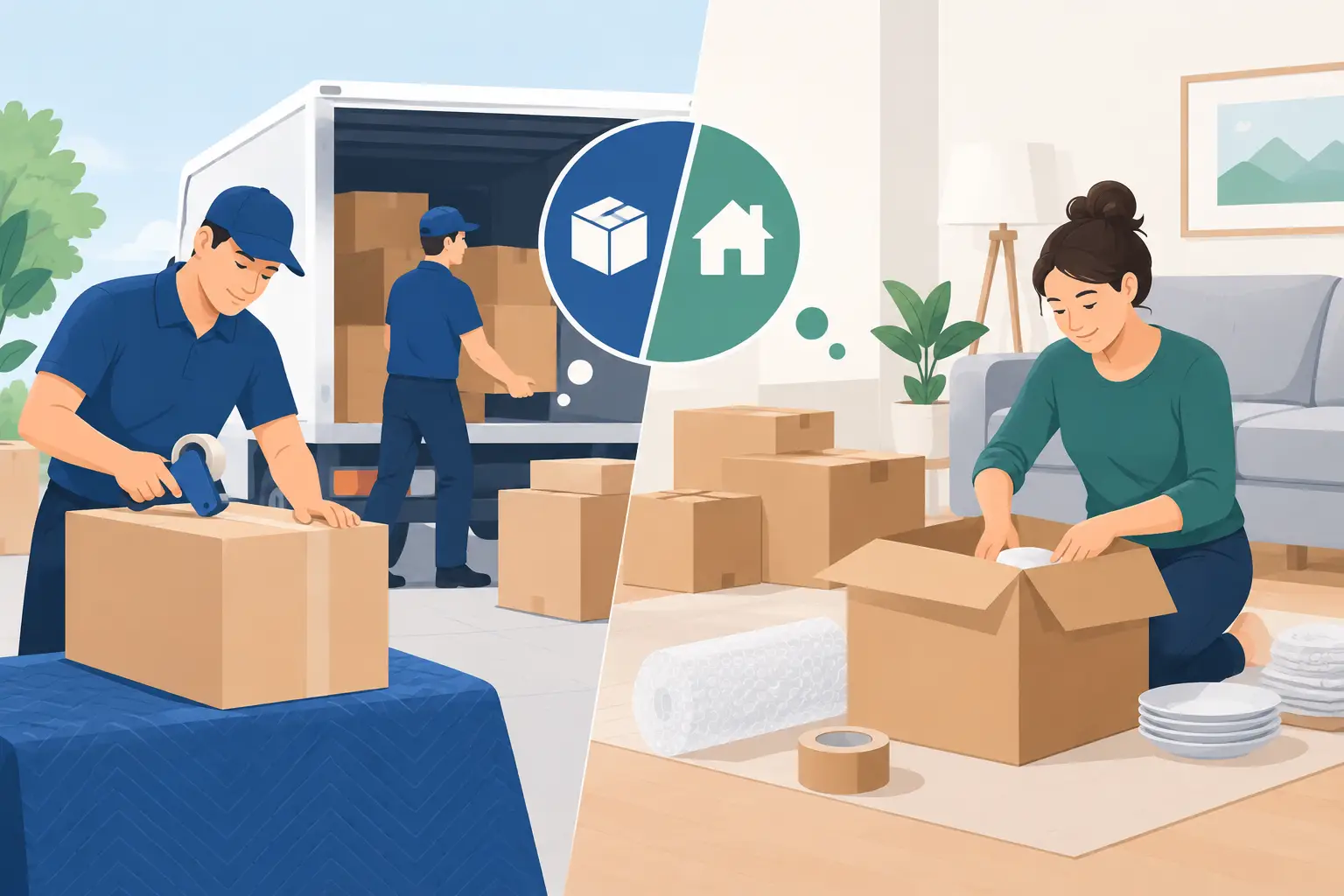
The packing service vs self packing decision usually comes down to one thing: what is your time, energy and peace of mind worth in the week before moving day? A small unit move with a flexible handover date is very different from packing a four-bedroom family home while working, managing kids and trying to settle a sale.
There is no single right answer. Self packing can keep upfront costs down and gives you full control over every box. A professional packing service can take a major job off your hands, particularly when fragile belongings, tight timelines or a long move across Victoria are involved. The best choice is the one that keeps your move practical, affordable and properly organised.
Packing service vs self packing: the real differences
With self packing, you source your own cartons and materials, pack each room, label the boxes and make sure everything is ready before the removalists arrive. You decide how items are grouped and where they go. For many people, this works well, especially if they can begin early and pack gradually over a few weeks.
A packing service means an experienced team packs all or part of your home before the move. This may include wrapping glassware, securing artwork, protecting furniture, packing kitchen cupboards and labelling cartons by room. You can arrange full-home packing, or use the service only for the rooms and items that need extra care.
The difference is not simply who puts items in boxes. It is about time, materials, handling experience and the likelihood of being ready when the truck pulls up. A move that starts with loose belongings, poorly sealed cartons and last-minute packing often takes longer and creates more opportunities for damage.
When self packing makes good sense
Self packing is often a sensible option for renters moving from a small flat, people with plenty of notice, or households working to a tight budget. If you are organised and do not have a large amount of delicate or heavy belongings, doing it yourself can be straightforward.
It also suits people who want to sort through everything as they pack. Moving is a useful chance to clear out unwanted clothes, old paperwork, broken appliances and furniture that will not fit the new place. Packing room by room can make it easier to donate items, sell them or take a proper load to the tip rather than paying to transport things you no longer need.
The catch is that self packing nearly always takes longer than expected. Kitchens alone can take hours once you account for wrapping plates, glassware, pantry items and awkward appliances. Then there are cupboards, linen, books, toys, sheds and the collection of odd items that seem to multiply when moving day gets close.
If you pack yourself, start early and use cartons that are made for moving. Supermarket boxes can be useful for light items, but they are often uneven in size, weakened by moisture or difficult to stack safely in a truck. Avoid overfilling boxes with books, and make sure every carton is taped along the base and clearly labelled with its room and contents.
When a professional packing service is worth it
Professional packing is most valuable when time is tight or the household is large. If settlement dates have shifted, your lease is ending, or you are moving from Traralgon to Melbourne while juggling work and family commitments, having help can turn a frantic week into a manageable one.
It is also a good option for fragile and higher-care items. Proper wrapping techniques matter for mirrors, framed artwork, glass tables, lamps, crockery and electronics. A team that packs for removals knows how to use wrapping, cartons and furniture protection so items are less likely to rub, shift or break during loading and transport.
Older homeowners downsizing can benefit as well. The physical work of bending, lifting, carrying cartons and climbing around cupboards can be draining, even before the actual moving day. A packing crew can handle the bulk of that work while you focus on deciding what comes with you.
For businesses, professional packing can reduce downtime. Office files, computers, monitors, stock and breakroom equipment need to be packed in a way that makes setting up at the other end quicker. The goal is not just getting everything onto the truck. It is helping the business get back to work with less disruption.
Cost: look beyond the price of cartons
Self packing is generally cheaper at the start because you are paying with your own time rather than labour. Still, it is worth adding up the real costs: cartons, tape, butcher’s paper, bubble wrap, mattress covers, box hire or purchases, fuel for supply runs and rubbish removal afterwards.
Professional packing adds labour and materials to the moving quote, so it will cost more upfront. But it can save money in less obvious ways. Well-packed cartons are faster to load, easier to stack and less likely to collapse. Good labelling also reduces the time spent hunting through boxes when you need the kettle, medications, school uniforms or work equipment on the first night.
The practical approach is to ask for a clear quote that separates packing from removal costs. That lets you compare full packing, partial packing and self packing without guesswork. You may find that having help with the kitchen, fragile items and artwork gives you most of the benefit without paying for every cupboard to be packed.
A middle ground often works best
Many households do not need to choose one option completely. Partial packing is a sensible middle ground when budget matters but certain jobs feel too risky or time-consuming.
You might pack clothes, linen, books and everyday items yourself, then arrange professional packing for the kitchen, glassware, mirrors, pictures and selected furniture. This keeps you involved in the move while getting experienced help where it matters most.
Another option is to do the packing but ask removalists to provide furniture protection, dismantle and reassemble suitable items, and handle the heavy lifting. That can be particularly useful for large wardrobes, beds, dining tables, pianos or pool tables. These are not jobs to rush with a mate, a ute and a few old blankets.
How to make either option run smoothly
Whether you pack yourself or book a service, a little preparation goes a long way. Set aside a clearly marked essentials box or bag for the first 24 hours. Include chargers, keys, paperwork, basic toiletries, medication, pet supplies, a change of clothes and anything children will need straight away.
Before packing begins, separate items that are not moving. Put donations, rubbish and things for friends in different areas so they do not get loaded by mistake. Check access at both properties too. Narrow driveways, stairs, apartment lifts, limited parking and wet Gippsland weather can all affect how a move is planned.
Be upfront about anything unusually heavy, fragile or awkward. A pool table, piano, large aquarium, safe or antique cabinet needs the right equipment, people and preparation. Letting the removalist know early helps avoid delays and allows the job to be priced and planned properly.
If you use a packing service, ask what materials are included, how cartons will be labelled and whether unpacking is available. It is also sensible to understand how insured handling applies to items packed by the removalist compared with items packed by the customer. Clear answers before moving day are always better than assumptions afterwards.
Choosing what suits your move
Choose self packing if you have time, are comfortable with the physical work and want the lowest upfront cost. Choose professional packing if your move is large, time-sensitive, fragile-heavy or simply more than you can reasonably manage on top of normal life.
For many moves, the answer sits between the two. Hawes’s Removals can help tailor practical packing and removal support around the parts of the job you need handled, with clear, honest pricing for households across Gippsland and wider Victoria.
The best moving plan is not the one that looks cheapest on paper. It is the one that gets your belongings to the new place safely, leaves you ready on moving day, and gives you enough energy to start enjoying your new home.