

 By Nathan Hawes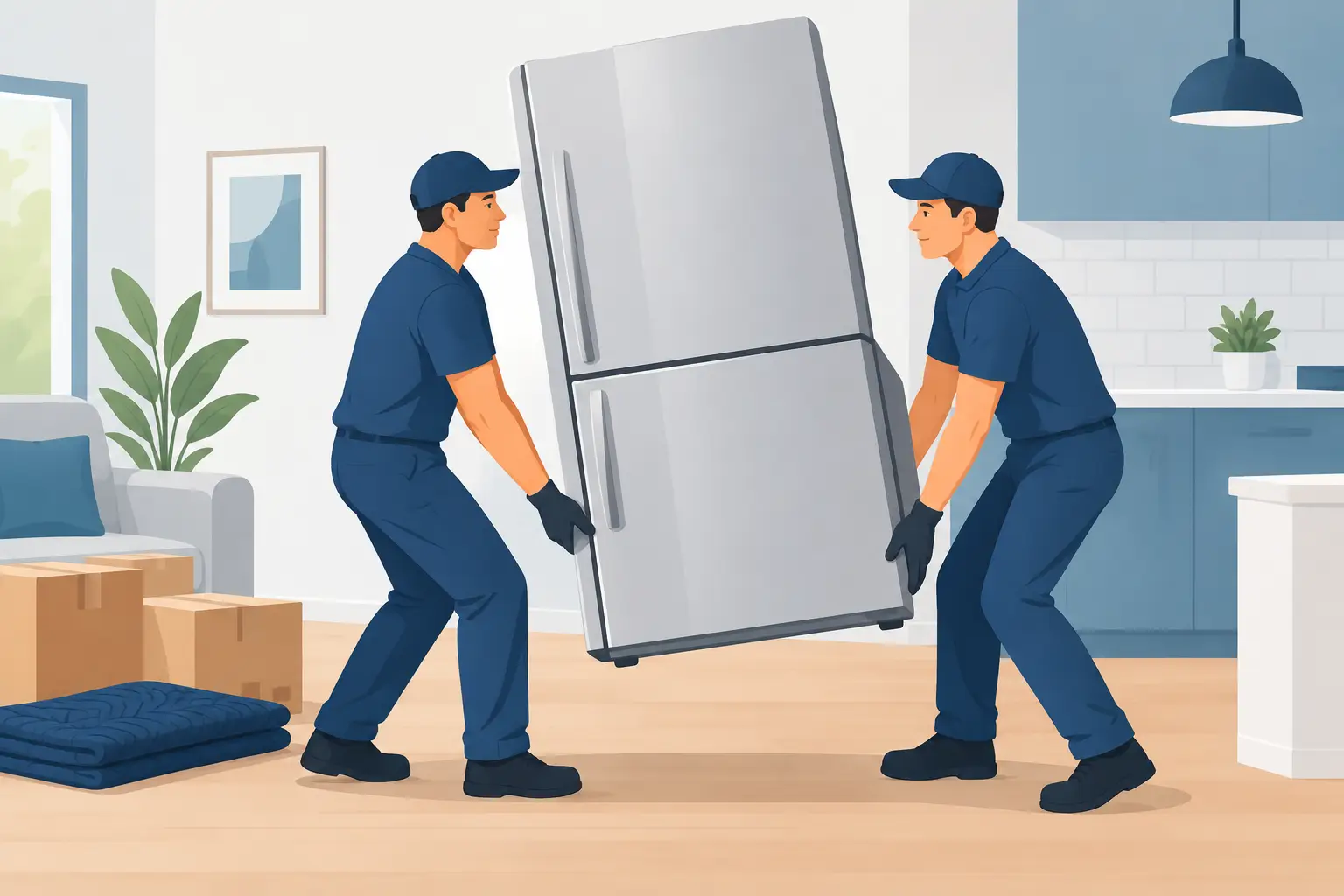
A fridge is one of the easiest household items to underestimate. It looks solid, but the weight sits awkwardly, the doors can swing open, and the cooling system does not appreciate being tipped about. Knowing how to move a fridge properly can save you from a damaged floor, a strained back, or arriving at your new place with an appliance that will not cool.
For a small bar fridge, two capable people and a trolley may be enough. For a full-size French-door fridge, a tight unit stairwell, or a long move from Gippsland to Melbourne, it is often smarter to have removalists handle it. The key is planning the job before anyone starts lifting.
Prepare the fridge well before moving day
Start at least 24 hours before the move. Empty every shelf, drawer and door compartment, including sauces and bottles that seem harmless until they spill through the back of a moving truck. Pack food into eskies with ice bricks if you need to keep it cold, and use up or give away what will not travel well.
Turn the fridge off at the power point, unplug it and leave both doors open. This lets the freezer defrost and helps prevent water leaking across the floor or into the vehicle. Put old towels around the base to catch meltwater, especially if there is a lot of ice in the freezer.
Once it is dry, remove loose shelves, glass panels, drawers and ice trays. Wrap these separately in moving blankets or towels and label them clearly. Leaving glass shelves inside can lead to cracks when the fridge bumps over a driveway, speed hump or uneven road.
If your fridge has a water dispenser or ice maker connected to plumbing, turn off the water supply first. Disconnect the line carefully and drain any remaining water as directed in the manufacturer’s instructions. If you are not comfortable with the connection, arrange a licensed plumber rather than forcing fittings or risking a leak at the new address.
Measure the route, not just the fridge
A fridge can fit through the kitchen doorway but still get stuck at the laundry door, front gate, stair landing or truck ramp. Measure the appliance’s height, width and depth, then measure every narrow point between its current spot and the vehicle.
Remember to allow room for hands, a trolley and turning corners. Door handles, hinges and the fridge doors themselves can often be removed to gain a few valuable centimetres, but take photos before dismantling anything and keep screws in a labelled bag. Do not remove components unless you are confident they can be refitted securely.
At the delivery address, measure again. Check the path from the driveway or parking area to the kitchen, including steps, gates and hallway turns. In many Traralgon and Gippsland homes, access is straightforward, but older weatherboards, units and split-level homes can have narrow entries that change the plan quickly.
Clear the route on both ends. Move mats, pot plants, kids’ toys, loose cords and furniture out of the way. If rain is expected, dry slippery outdoor steps and make sure there is a clear place to set the fridge down under cover.
What you need to move a fridge safely
A proper appliance trolley is the safest option. It has a tall frame, wide wheels and a strap designed to hold the fridge firmly against it. A standard hand trolley may suit a small fridge, but it is not ideal for large, heavy appliances.
You will also need moving blankets or thick furniture pads, strong ratchet straps, tape to secure doors and a pair of enclosed, non-slip shoes for each person lifting. Gloves can improve grip, but they are not a substitute for safe lifting technique. Avoid using thin rope, bungee cords or a dolly that is too small for the fridge’s weight.
Protect door frames, walls and flooring before you start. Blankets can be taped around tight corners, while cardboard or protective boards can help on timber floors. Do not tape directly onto polished timber, painted surfaces or the fridge finish for long periods, as adhesive can leave marks.
How to move a fridge with a trolley
Keep the fridge upright wherever possible. This protects the compressor oil and refrigeration lines. With one person on each side, gently tilt the fridge backwards just enough to slide the trolley’s base plate underneath. Never try to catch the full weight if it begins to fall.
Strap the fridge firmly to the trolley at two points, usually around the upper and middle sections. The straps should be tight enough that the fridge cannot shift, but not so tight that they dent the doors or casing. Wrap the appliance in moving blankets before strapping it in place.
One person should guide from the top while another controls the trolley from below when going down a ramp or step. Take it slowly. If there are several stairs, a tight turn or a steep driveway, stop and reassess rather than pushing through. This is where a professional removalist team, with the right equipment and enough hands, is worth considering.
Do not lift a fridge by its doors, handles or rear cooling pipes. Lift from stable points under the sides, keep your back straight, bend your knees and communicate every movement. A simple call of “ready, lift” and “stop” prevents people working against each other.
Can you lay a fridge down when moving it?
Sometimes you have no choice, particularly if the fridge will not fit upright in a ute, trailer or van. But upright is always the better option. Laying a fridge on its side can allow compressor oil to move into the refrigerant lines, which may affect performance if it is switched on too soon.
If it must travel on its side, check the manufacturer’s manual first. Choose the side recommended by the maker, often the side that keeps the compressor pipes facing up. Never lay it on the front or back, as this can damage doors, coils or components.
Use thick padding beneath it, secure it so it cannot slide, and keep it out of direct rain. Do not stack boxes or furniture on top. A fridge is heavy enough to damage other belongings, and pressure on its doors or cabinet can cause costly dents.
When it has travelled on its side, stand it upright at the new home and leave it unplugged for at least 12 to 24 hours. The exact settling time depends on the manufacturer’s instructions and how long it was on its side. If it stayed upright during transport, a few hours is usually a sensible precaution before switching it back on.
Secure the fridge in the vehicle
Once the fridge is loaded, position it against a solid wall of the truck or trailer, ideally near the front where movement is reduced. Keep it upright and use ratchet straps attached to suitable anchor points. It should not rock when you give it a careful test.
Do not rely on surrounding boxes to hold it in place. Boxes compress and shift. Use furniture blankets between the fridge and other large items to prevent rubbing and dents, then pack lighter belongings around the area only after the appliance is properly restrained.
For a longer Victorian move, consider the road conditions too. Uneven country roads, roundabouts and sudden braking all put pressure on a poorly secured load. Careful loading saves time and damage at the other end.
Set it up carefully at the new home
Place the fridge in its final position before plugging it in. It is much easier to adjust empty than full. Leave clearance around the sides and back for ventilation, following the manufacturer’s spacing advice. A fridge pushed hard against a wall may run less efficiently and work harder than it needs to.
Check that it sits level. Many fridges have adjustable front feet, and a slight backward tilt can help doors close properly. Reinstall shelves and drawers, reconnect the water line if applicable, and inspect for visible damage before loading food back in.
After the settling period, plug it in and give it time to reach temperature. It may take several hours before it is properly cold. Listen for normal operation, check that the interior light works, and look around the water connection for leaks if one is fitted.
When it makes sense to call removalists
Moving a fridge yourself can be manageable, but not every move is a two-person job. Stairs, narrow access, oversized appliances, tight moving schedules and long-distance transport all add risk. The cost of professional help can be less than replacing a damaged fridge, repairing a gouged floor or taking time off work with a back injury.
At Hawes’s Removals, fridge moves are handled as part of a careful home move or as a single-item job where access allows. A trained team can bring the right trolley, protective blankets and vehicle restraints, then get the appliance from door to door without making it the hardest part of your moving day.
Give yourself time, measure twice and do not be afraid to stop if the job feels unsafe. A fridge will wait an extra hour. Your back, your floors and the appliance itself are harder to replace.