

 By Nathan Hawes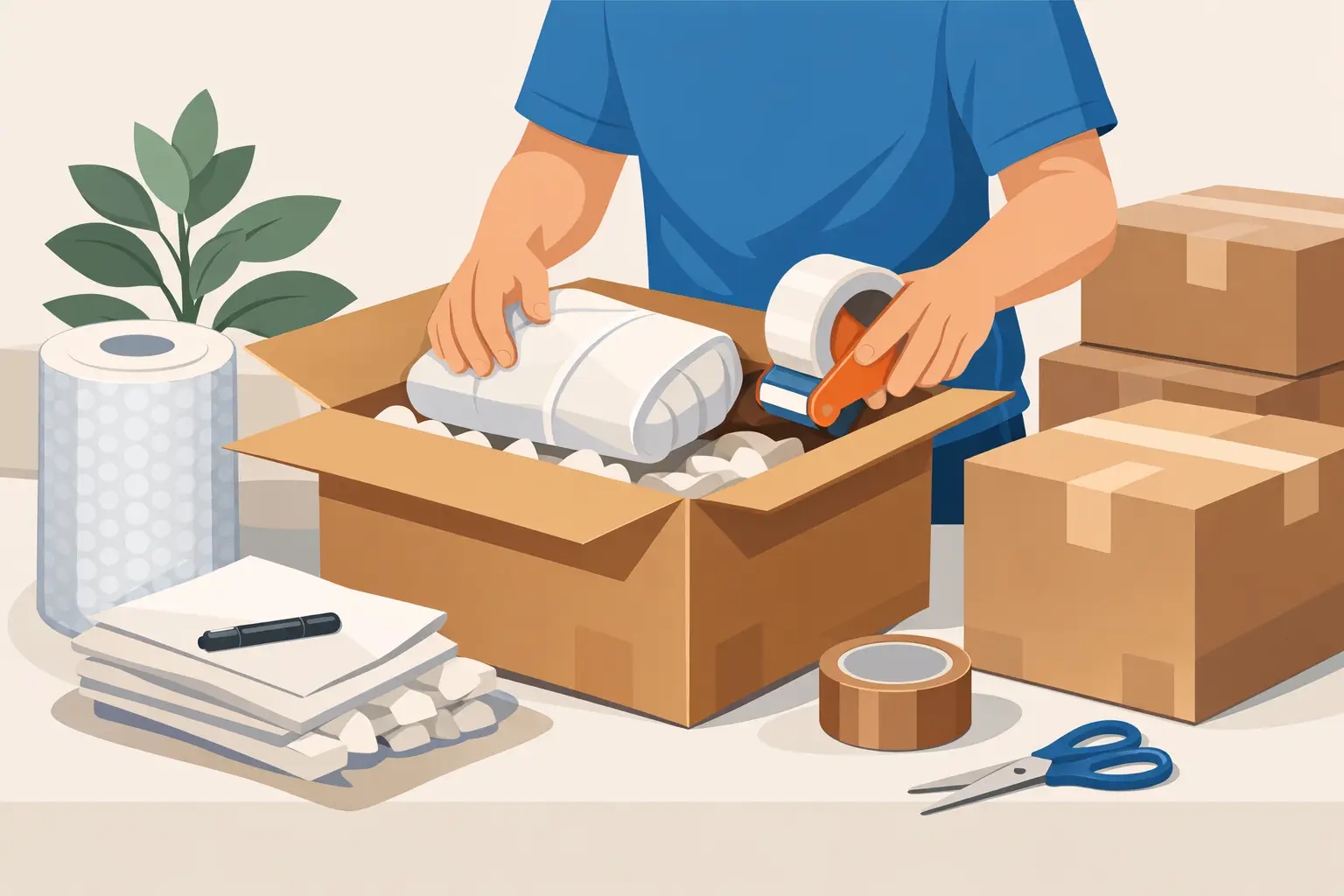
A box usually gives way at the worst possible moment – halfway down the front steps, in the back of the truck, or just as you thought the hard part was done. If you are wondering how to pack moving boxes so they actually hold up, the trick is not packing faster. It is packing smarter, with the right box, the right weight, and a bit of common sense about what should go where.
A lot of moving damage happens before the truck even leaves the driveway. Overpacked cartons split. Underfilled boxes collapse when they are stacked. Fragile items knock together because there is empty space left inside. Good packing does not need to be fancy, but it does need to be deliberate.
How to pack moving boxes without creating problems later
The best packing jobs are the ones that make loading, carrying and unpacking easier. That means thinking beyond what fits in the box. You also want to think about weight, shape, and how that box will be handled by real people carrying it through hallways, across paths and into a truck.
Start with strong boxes in a few useful sizes rather than a pile of random cartons. Small boxes are best for heavy items like books, tools and pantry goods. Medium boxes suit toys, folded clothes, kitchen items and linen. Large boxes are fine for light, bulky things such as doonas, pillows and lampshades. If you put heavy gear into large boxes, they become awkward quickly and the bottom can fail.
Tape matters more than people expect. Use proper packing tape and run it across the base seam, then again in the opposite direction if the box is carrying anything weighty. A weak base is one of the most common causes of breakage on moving day.
You also want to avoid mixing completely different item types in one box just to fill space. A box of books with a table lamp on top might look efficient, but it is harder to stack and more likely to shift. Similar items packed together are easier to protect and easier to unpack at the other end.
Pack by room, but think by weight
Packing room by room keeps things organised, but weight should still guide your decisions. Kitchens and studies are where people often go wrong because small items add up fast. One carton of books can become too heavy to lift properly, and one box of crockery can be a risk if the base is not reinforced.
A good rule is this: if you need to strain to lift the box from the floor, it is too heavy. Split it into two. That one choice can save your back, your belongings and a lot of frustration.
Labelling helps, but only if it is clear. Write the room and the main contents on at least two sides of the box, not just the top. Mark fragile boxes honestly. There is no point writing FRAGILE on every carton if half of them only contain towels. The labels need to mean something when the truck is being loaded.
Kitchen boxes need the most care
The kitchen usually takes longer than expected because there are so many odd shapes, breakables and heavy items. Plates should be wrapped individually and packed upright, not stacked flat. Glasses and mugs need paper around each piece, with enough padding between layers so they do not knock together.
Pots, pans and plastic containers are less delicate, but they still need to be packed so they do not crush lighter items. Heavier kitchenware should sit at the bottom, with soft packing material filling any movement. Pantry items should be checked for leaks before they go in a box. No one wants to arrive at the new place and find olive oil through a carton of dry goods.
If you are moving appliances like mixers, air fryers or coffee machines, remove loose parts and pack them separately if needed. Cords should be tied neatly and placed inside the same box, clearly labelled.
Books, files and office items
Books are simple to pack but easy to overdo. Use small cartons only, and pack them flat or spine down so the covers stay supported. Do not leave empty space at the top, because books shift more than people think in transit.
For home offices and small business moves, keep files upright and grouped logically. Loose paperwork is a headache later. Computers, monitors and printers should be packed with padding around corners and screens, and cables should be bagged and labelled so setup is easier at the other end.
Fragile items need less space, not more
People often assume fragile things are safest in a big box with lots of room. Usually, the opposite is true. The safer option is a suitably sized carton with enough wrapping to cushion the item and no spare room for movement.
When packing picture frames, mirrors or decor, wrap each piece fully and stand them upright where possible. Flat stacking can place too much pressure on the glass. For ornaments and smaller breakables, use scrunched paper or other padding to stop movement on all sides.
Do not rely on newspaper ink for delicate surfaces if marking could be an issue. Clean paper or proper packing paper is a better choice for anything with a finish you want to keep in good nick.
If an item is genuinely awkward, valuable or sentimental, it may be worth setting it aside for special handling. That is especially true for antiques, artwork, musical instruments or bulky pieces that do not belong in standard cartons.
Clothes, linen and everyday household items
These are usually the easy wins. Folded clothes, towels and linen can fill medium or large boxes nicely without creating too much weight. They are also useful as soft padding around less fragile household items.
Shoes should be paired and packed so they do not scuff other belongings. If you still have the original boxes for better shoes or boots, use them. Wardrobe cartons can save time for hanging clothes, but if you are keeping costs down, clean folded packing works just fine for most moves.
Kids’ toys, soft furnishings and seasonal items are worth grouping sensibly rather than throwing into whichever box is empty. It makes unpacking much less painful when the basics are easy to find.
What not to pack in standard moving boxes
Some items should not be boxed the same way as general household goods. Cleaning chemicals, paint, fuel, batteries and anything flammable need extra care and, in some cases, separate transport arrangements. Open liquids can leak, and heavy sharp tools can tear through cardboard if they are not secured properly.
It also makes sense to keep essentials out of the moving stack altogether. Medications, chargers, keys, important documents, a kettle, basic toiletries and a change of clothes should travel with you, not disappear into the truck load.
This is one of those areas where convenience and caution need to meet in the middle. You want the move to be efficient, but not at the cost of losing track of the things you will need first.
How to stack packed boxes for the move
Even well-packed boxes can be damaged if they are stacked badly. Heavier cartons should always go on the bottom, with lighter and more fragile ones higher up. Boxes need flat tops and firm sides if they are going to stack safely. Bulging cartons or partly crushed boxes create unstable loads.
Try to keep sizes consistent where you can. A neat stack is not just nicer to look at – it is safer in the truck and quicker to load. This matters even more on regional and longer-distance runs, where there is more road movement over time.
If you are moving in or out of units, tight driveways or places with awkward access, smart packing becomes even more useful. Boxes that are too heavy or shaped badly slow everything down and increase the risk of bumps and scrapes.
When it makes sense to get help packing
Some people prefer to pack everything themselves. Others would rather hand over the kitchen, the fragile items, or the whole lot. There is no right answer for every move. It depends on your time, your budget and how much you are moving.
If you are short on time, dealing with valuable furniture, or trying to juggle a family move with work, getting help with packing can take a fair bit of pressure off. An experienced crew will usually pack faster, use space better and spot the problem items before they become breakages. Hawes’s Removals sees this all the time – the moves that run smoothly usually start with solid packing and realistic box weights.
You do not need to make it perfect. You just need to make it safe, manageable and easy to unload at the other end. A sturdy box, sensible weight and clear label go a long way. Pack with the carry in mind, not just the cupboard it came from, and moving day tends to feel a lot less hard than people expect.